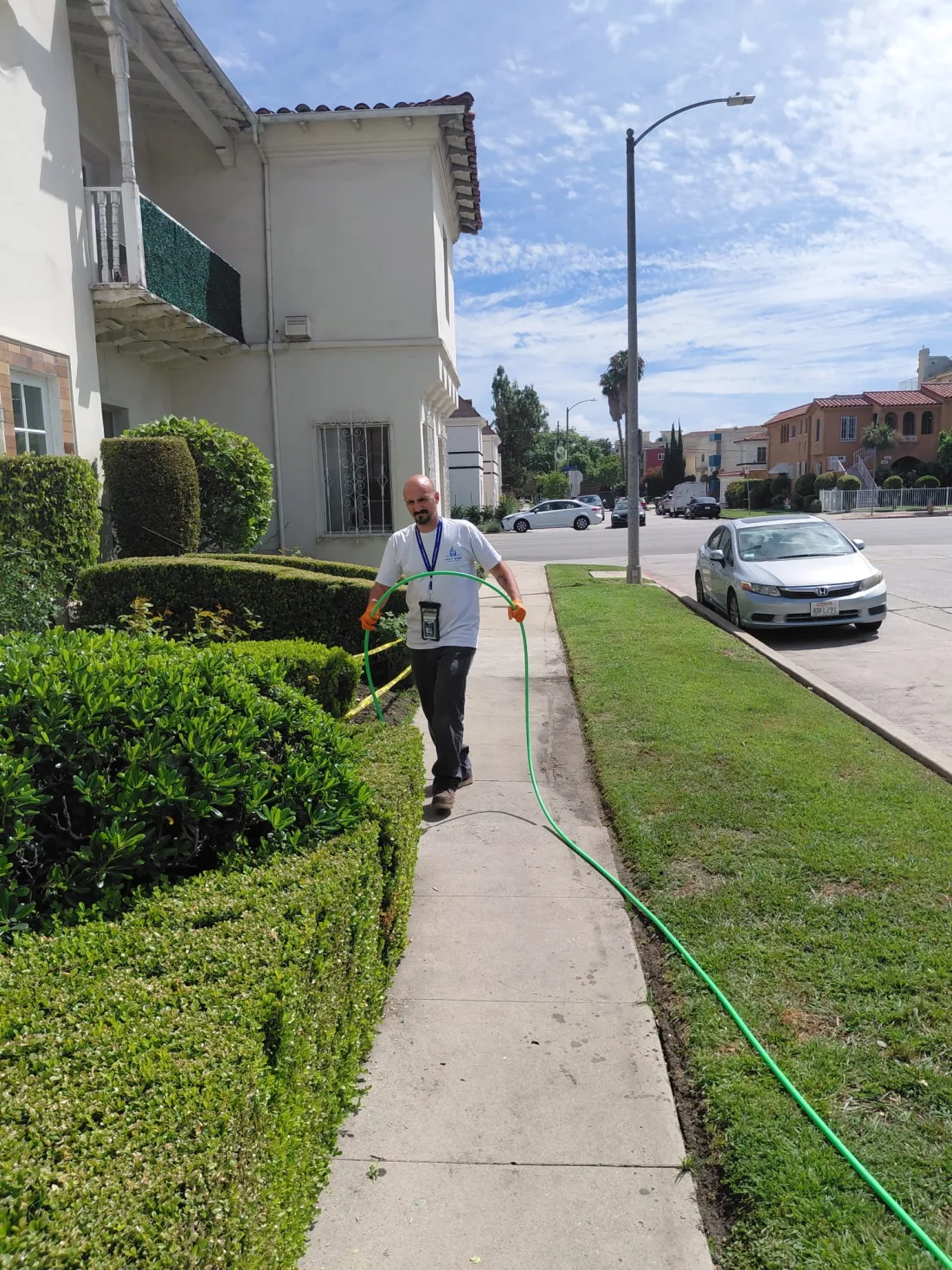
Hydrojetting uses 3,000-4,000 PSI water to scour the inside of a pipe clean — grease, scale, root mats, sludge. It does what a snake cannot: restore the pipe to its original interior diameter.
Hydrojetting vs. rooter
A rooter cuts a hole through a clog. The water moves again, but the pipe walls are still coated. In 6-12 months, the same clog returns.
Hydrojetting cleans the entire pipe interior. A high-pressure hose with a multi-port nozzle is fed up the line; the rear-facing jets propel the hose forward while scouring the walls. We pull it back at a controlled rate, and what comes out is everything that was on the inside of the pipe — grease, scale, root debris, paper.
For a one-off clog with no recurrence pattern, rooter is the right answer. For recurring clogs, restaurant grease lines, or any pipe you want clean for the long term, hydrojetting is the right answer.
When hydrojetting is the right call
Recurring kitchen mainline clogs in homes that cook with oil. Grease coats the pipe walls and re-clogs within months of any rooter clearing. One hydrojet, then prevention going forward, ends the cycle.
Tree-root mainline backups in older Valley homes. The rooter cuts the existing roots flush, then hydrojetting flushes the root debris and any remaining hair-roots all the way to the sewer main. Without the jet step, debris settles back at the next low point.
Restaurants and commercial kitchens. Health code requires regular grease line maintenance; hydrojet on a quarterly or semi-annual schedule prevents emergency closures.
Before lining or relining a pipe (CIPP). The pipe must be clean and dry for the resin to bond. We hydrojet ahead of any lining work.
Our process
We start with a camera inspection so we know what we are jetting. If the line has a structural problem (collapse, severe offset), hydrojetting will not fix it and we say so up front.
We set up the jetter outside, run the high-pressure hose through the cleanout to the obstruction, and work down the line at a controlled rate. The session typically runs 45-90 minutes for a residential mainline.
After the jet, we run the camera again. You see the before and after on the monitor, and you keep the recording. If the pipe is too damaged to hold flow long-term, we quote replacement or lining at that point.
Pricing guidance
Residential mainline hydrojetting: $475-$1,200 depending on line length and severity. Restaurant grease line: $695-$1,800 per visit; recurring contracts available at lower rates. Pre-lining hydrojet: priced as part of the lining project. Camera inspection included with hydrojet packages.
Frequently asked questions
- Will hydrojetting damage older pipes?
- Modern hydrojets have adjustable pressure. We assess pipe condition with a camera first. Cast iron, copper, and PVC in good condition handle hydrojetting fine. Severely degraded pipe — typically 70+ year-old cast iron — we don't jet; we recommend lining or replacement instead.
- How long does a residential hydrojet take?
- 60-90 minutes for setup, jetting, and post-camera. Same-day appointments available.
- How often should commercial kitchens hydrojet?
- Once a quarter for high-volume kitchens. Twice a year minimum even for low-volume. Most LA County health districts expect documented maintenance — we provide a service certificate after each visit.